
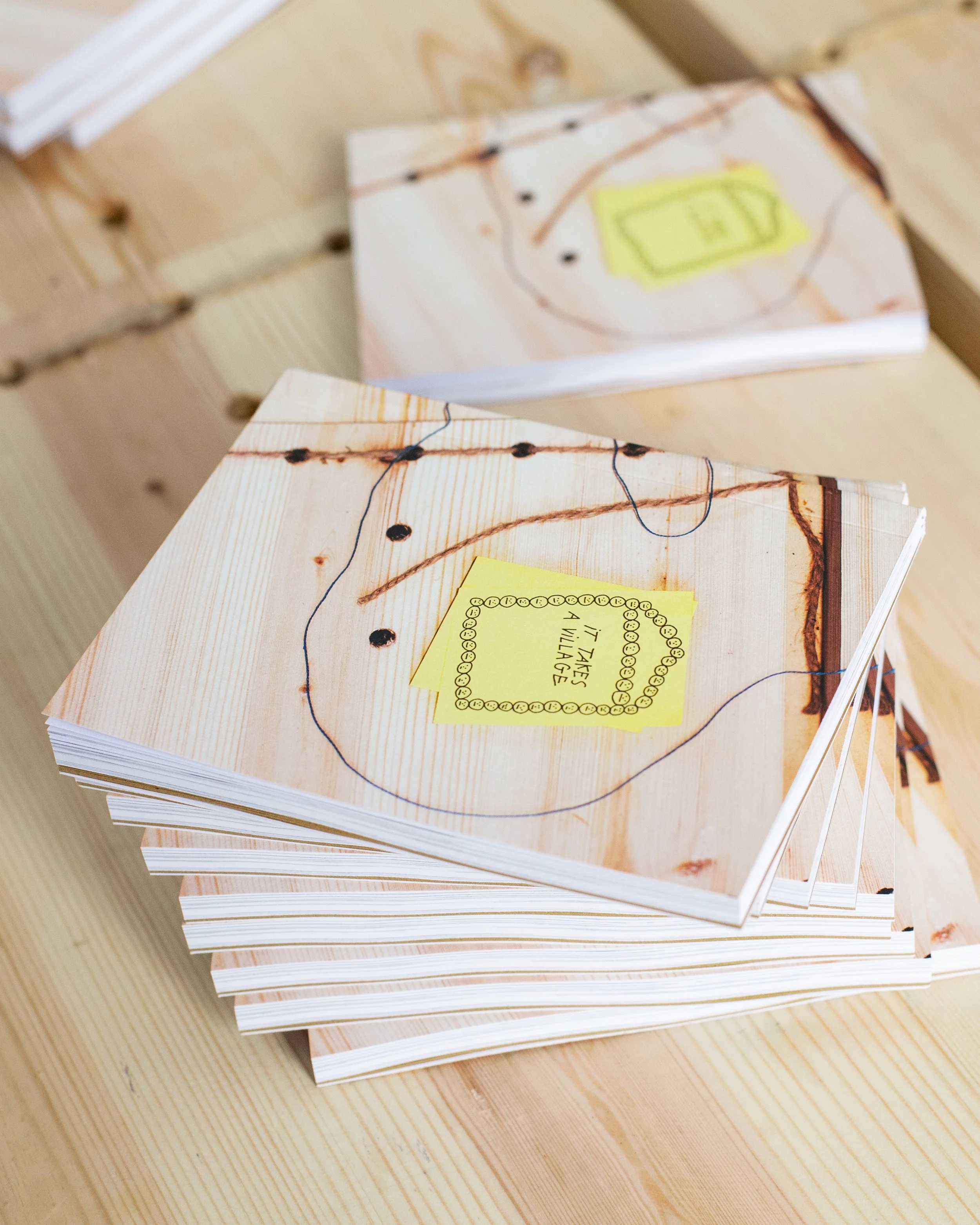
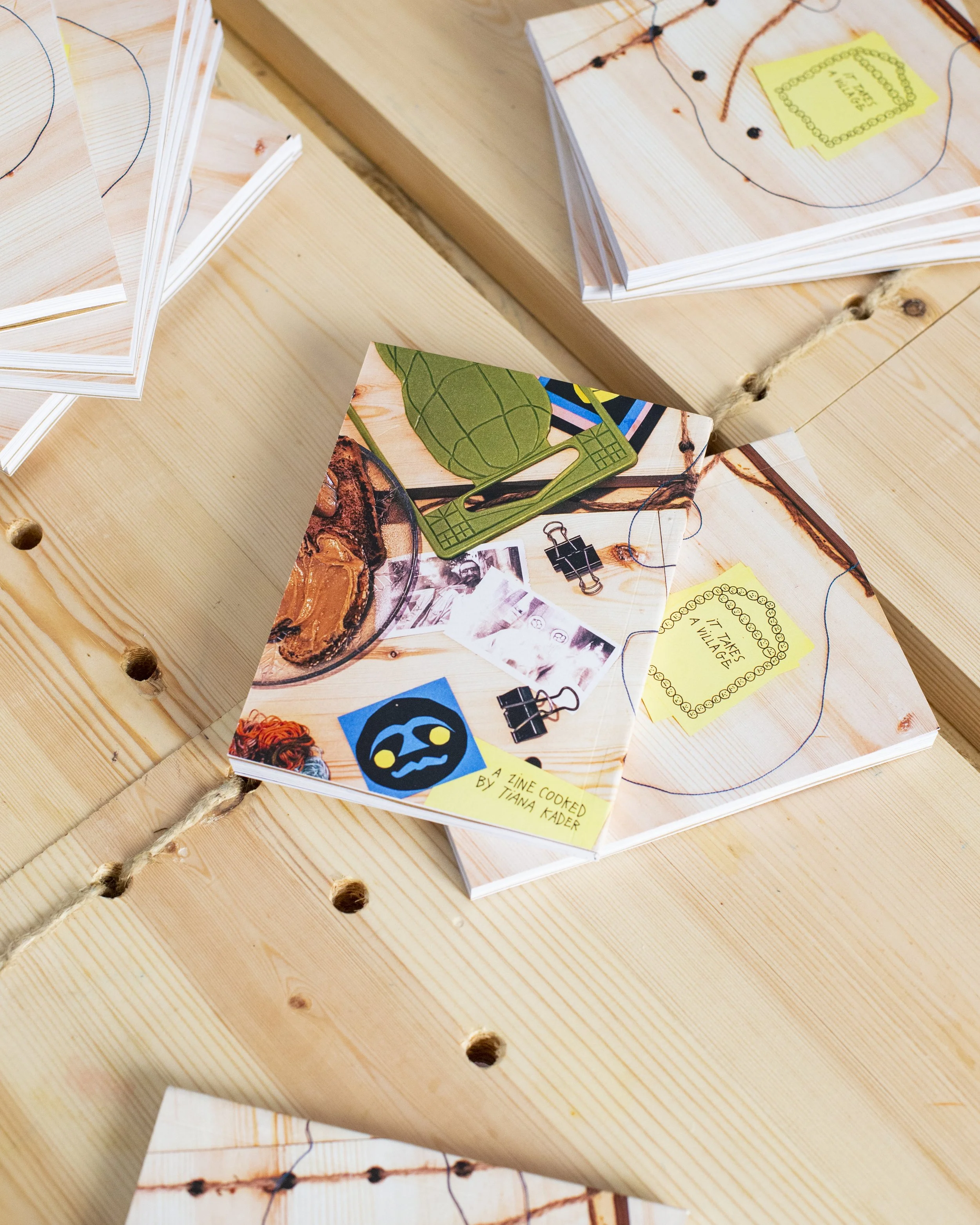
it takes a village
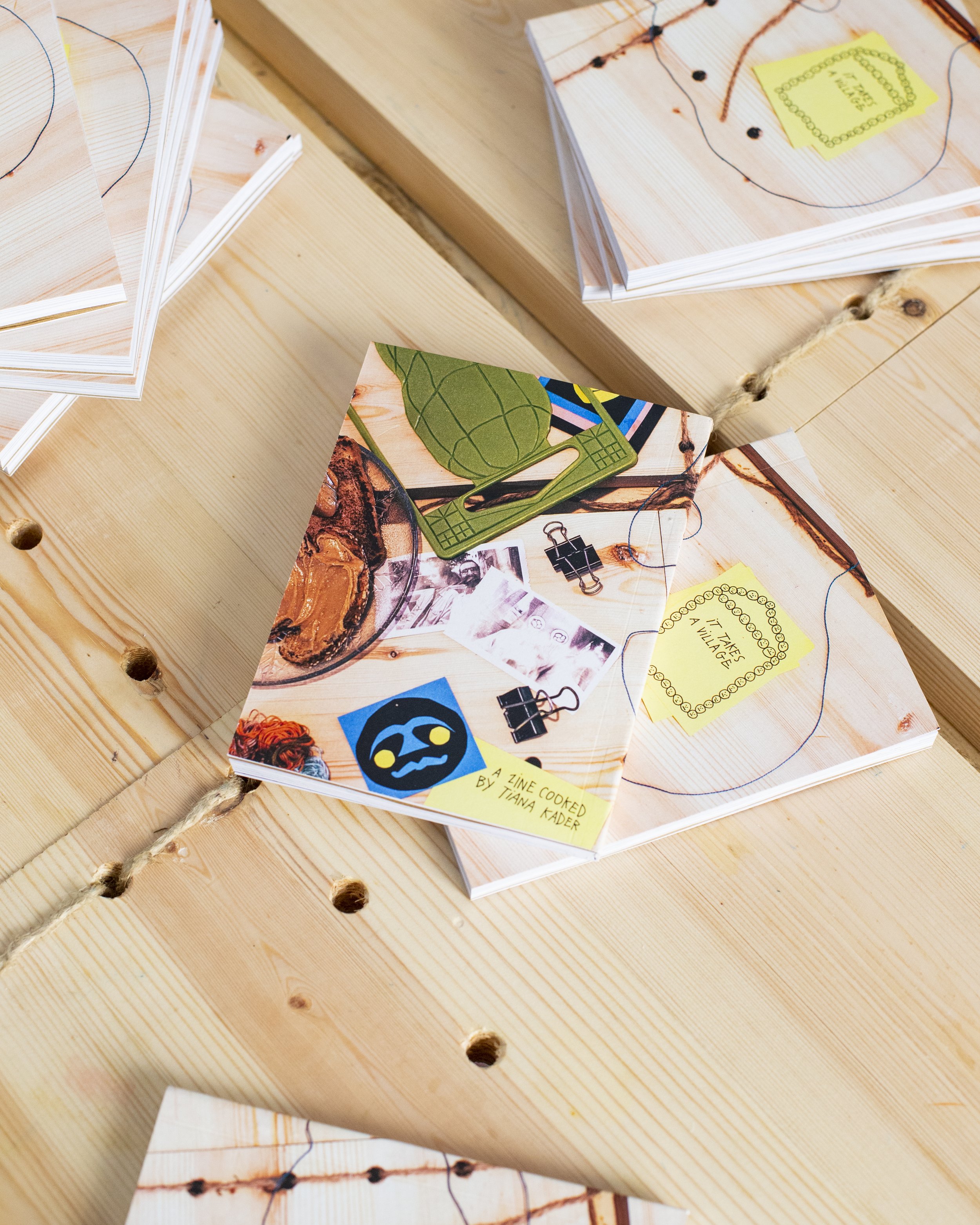
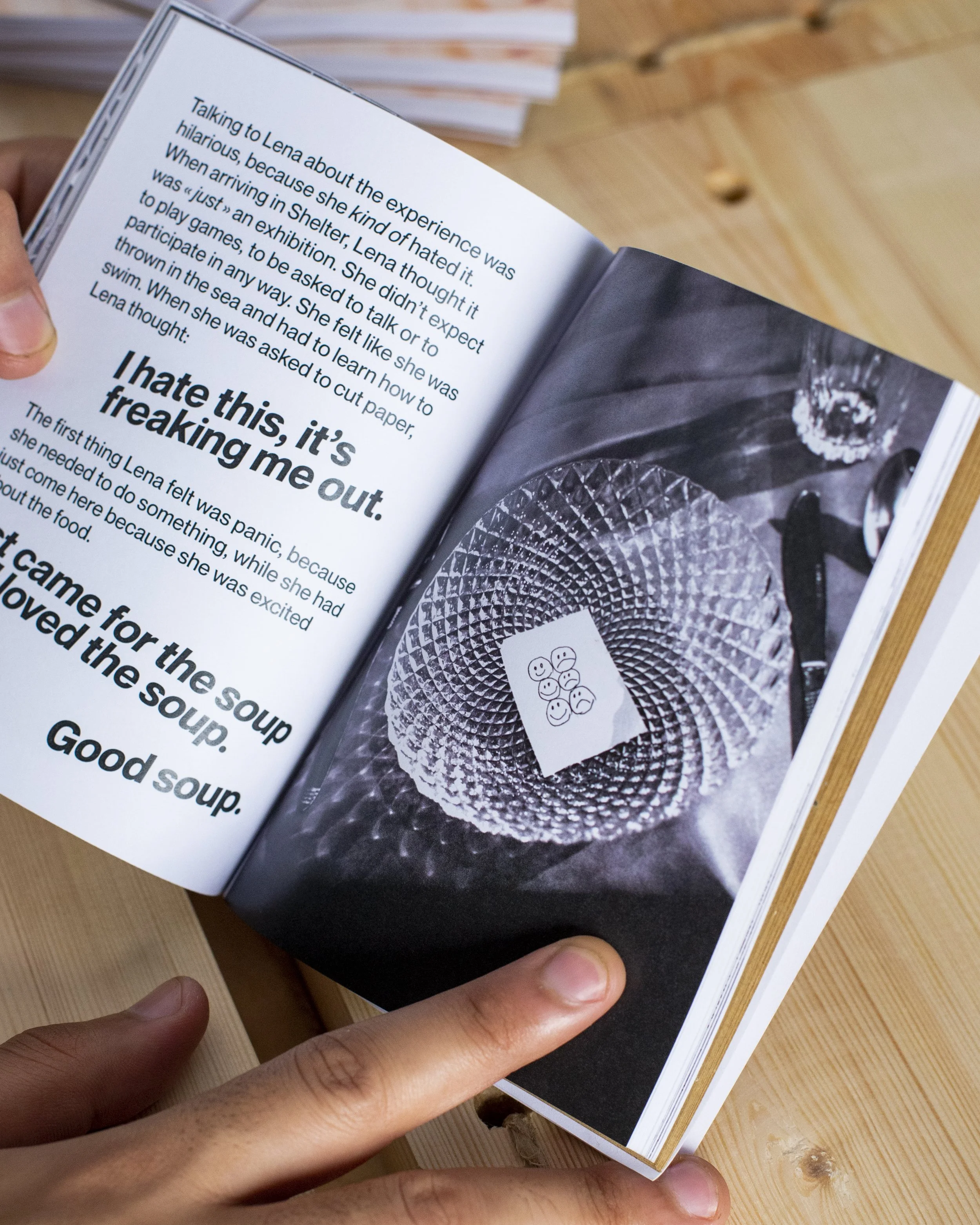
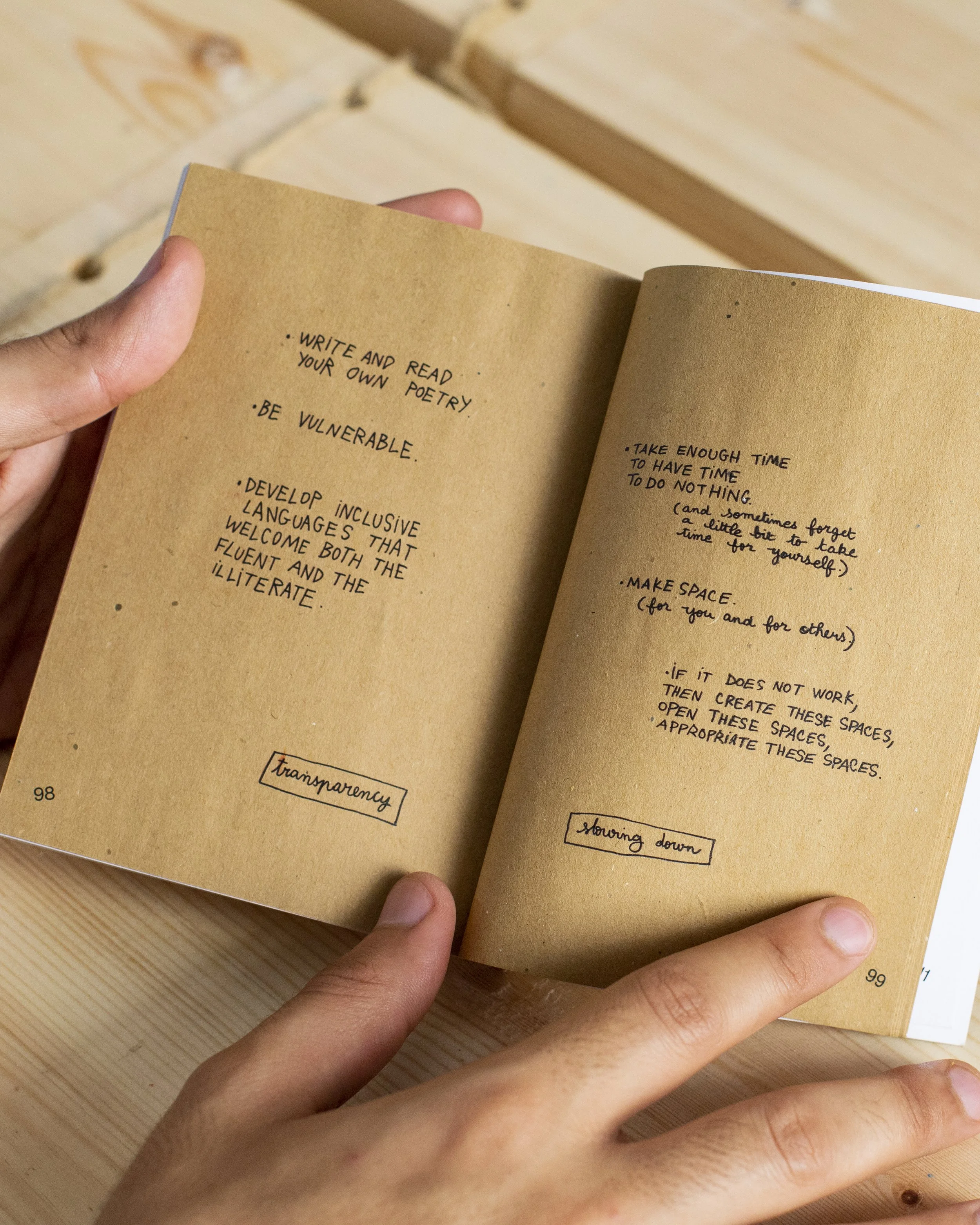
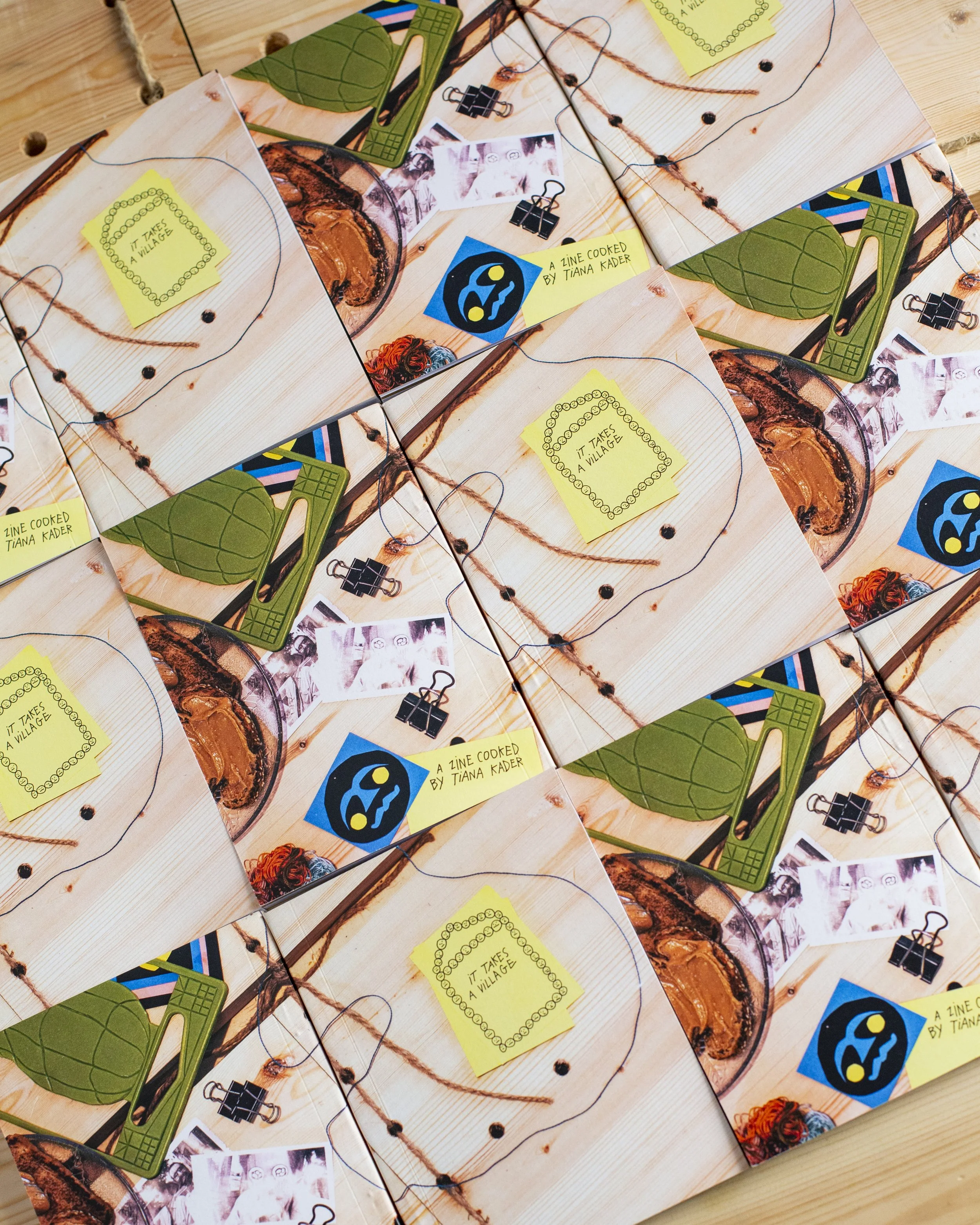
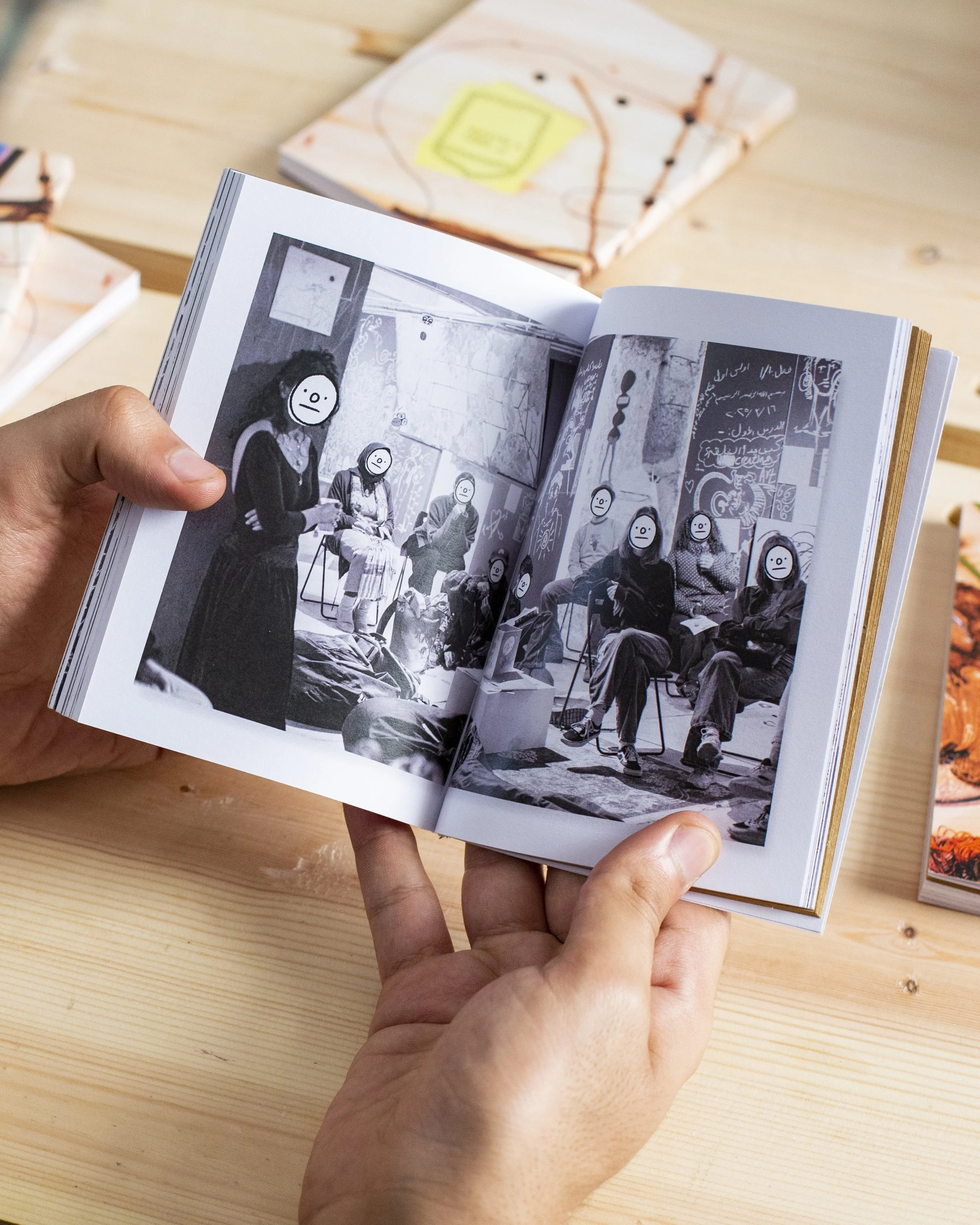
It takes a village is a 112-page self-produced publication exploring the living archive of the after-Haven, as a continuation-conversation-conclusion of the 2-month residency in collaboration with the Czech artist František Felix in Shelter Art Space.
It is a side-quest, an experiment, a way to give back, and an attempt to answer a single question: after a week in Haven, what can we learn? The zine answers this question in many different ways, through many voices. It holds numerous testimonies, secrets, hot takes, laughter and tea.
It was locally printed in 48 copies, in Alexandria in June 2025, by L’Ancre.
Introduction : on Barthes, wounds and the methodological framework
“In La Chambre Claire, his essay about photography and image study, Roland Barthes describes two concepts: on one hand, the studium is the entry point in the image, it is both the concept, the context, the framework, and the action; and on the other hand, the punctum is the sensitive point that interrupts the studium, it is the detail, intensely subjective, that punctures, wounds, bruises the viewer. He says :
It is it that leaves the scene like an arrow and comes to pierce me.
The punctum is, in its essence, always unintended, uncontrolled, unplanned, unexplained, escaping the frame, yet the very detail that defines the experience of the viewer. It just happens, and it goes through you.
For this little publication, I went on a quest. I sat for a long time with some of the Haven residents, offered them some tea when I could, and tried to look for their puncta.
I wanted to know about that one moment: something small, personal, hard to explain, a gesture, a vibration, a shift in the atmosphere. I wasn’t asking for the highlight, the climax, or the most impressive part; like Barthes, I wanted to know about what pierced them: the moment they didn’t see coming.
I was bewildered to find in their responses that often these moments had nothing to do with the program, the artworks, the (planned) activities, the context, the studium - because, of course, these puncta were not part of the brief, they couldn’t be rehearsed.
And yet, they stayed. They did something. I think that’s what this whole experiment was about: setting a frame and watching how it breaks, creating a structure not to contain, but to be altered by what and who enters it, letting the artwork be not what is shown, but what happens.
As a matter of example, I can risk myself to start: my favorite moment was not part of the studium we built together. As much as I loved the backstages, the in-betweens, the opera-bathed calm-before-the-storm camping-table diners and the cigarettes in the kitchen, my punctum was the conversation-pit that happened on the last evenings and the conversations that didn’t stop since then.
[…] I gathered these conversations here […]. Be aware that they’re not conclusions - just traces, feelings, impressions, testimonies, marks left by something that […] is still very much alive.
I then proceeded to ask.”